Stephanie Gilezan
The Long Game
Building Influence, Wealth, and Credibility That Compounds
There is an enormous premium placed on speed in business culture fast pivots, rapid scaling, immediate results. And while urgency has its place, the professionals who build genuinely durable careers are not the ones who moved the fastest. They are the ones who had the discipline to play a longer game than almost everyone around them. Compound growth in influence, in capital, in credibility requires time and consistency that the short-game mindset is not willing to invest.
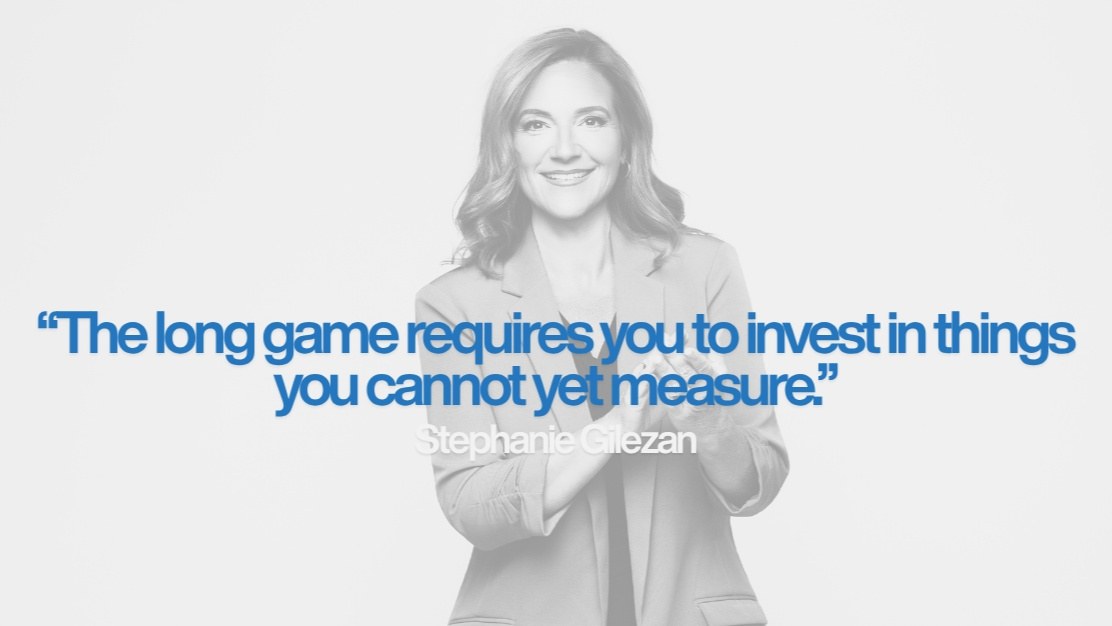
I did not build what I have built in a single transaction cycle or a single market boom. I built it across decades of deliberate positioning, strategic relationship investment, and the willingness to take a long view when shorter-term thinking would have been easier and more immediately rewarding. Some of the most significant relationships in my business today were planted years ago in conversations that had no immediate return. The long game requires you to invest in things you cannot yet value.
Credibility compounds in the same way capital does slowly at first, then rapidly. A professional who has consistently delivered over ten years commands a kind of market trust that cannot be purchased or accelerated. Clients who have worked with you, partners who have been through difficult deals with you, colleagues who have watched you hold your standards under pressure these are the people who refer business, provide access, and extend trust in ways that no marketing campaign can replicate.
The long game also requires a different relationship with failure. Short-term thinkers exit at the first sign of difficulty. Long-game players understand that setbacks are data information about what needs to be adjusted, what was misjudged, and what structural gaps need to be addressed. The ability to stay in the game through cycles, to absorb hard lessons without abandoning the strategy, is itself a competitive advantage.
Every significant decision I make in business is filtered through one question: How does this position me five years from now? Not this quarter. Not this transaction. Five years. That discipline is what separates a career from a run of good deals.
Stop optimizing for the moment. Start building for the decade. That is where everything you actually want lives.
Start evaluating your decisions through a longer lens.
Not what works this quarter, but what compounds over the next five years.
That shift alone will change what you prioritize and what you walk away from.
What is one decision you made recently that was based on long-term positioning rather than short-term gain?
Originally published on LinkedIn on Apr 28, 2026.