Stephanie Gilezan
From Hustler to Owner
The Shift That Actually Builds Wealth and Control
There is a particular kind of exhaustion that comes from years of high performance that hasn't translated into freedom. You are producing closing deals, generating revenue, staying ahead of the market but the wealth and autonomy you've been working toward still feel like they are somewhere just ahead of you. That gap is not a work ethic problem. It is a structural one. The hustle model, by design, requires your constant presence to function. Ownership does not.
I built my career on production. I was the deal-maker, the rainmaker, the person on whom the outcome depended. For years, that identity was both my greatest asset and my greatest constraint. The shift from thinking like a top producer to thinking like an owner required me to start asking different questions. Not 'how do I close this deal?' but 'how do I build a business that closes deals without requiring me to be in every room?' Not 'how much can I earn?' but 'what am I building equity in?'
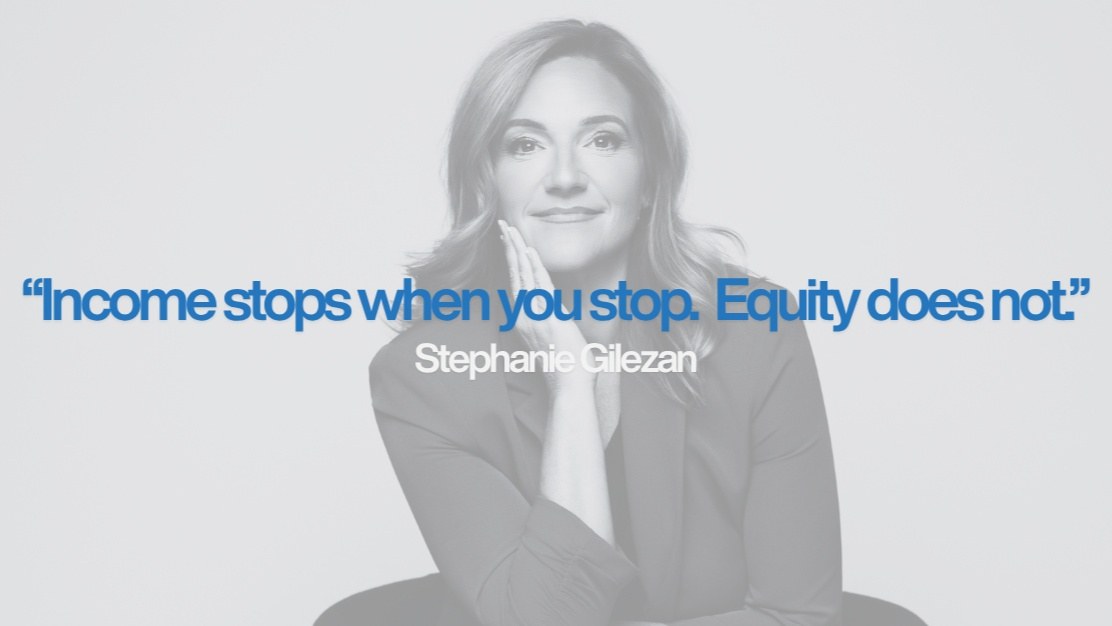
The owner's mindset is fundamentally about transferability and compounding. Income disappears when you stop working. Equity accumulates. Relationships that are yours not tied to a brand or a brokerage or a company travel with you and increase in value over time. The systems you build, the teams you develop, the processes you document: these are the structural assets that allow your business to operate beyond your personal bandwidth.
This shift is uncomfortable for high performers, because it requires releasing control of the work in exchange for control of the outcome. It means investing time in infrastructure that doesn't produce immediate revenue. It means trusting other people to execute, which requires you to have built the right team and the right systems first. But the discomfort is temporary. The constraint of never making this shift is permanent.
The professionals who achieve real financial and operational freedom are not the ones who outworked everyone else. They are the ones who stopped being the product and started building the platform.
You cannot buy back the years you spent being indispensable. Start building something that works without you starting now.
If your business depends entirely on you, you do not own it.
Start identifying what can be systemized, delegated, and built into something that operates beyond your time.
That is where real freedom begins.
What is one part of your business that still depends too heavily on you?
Originally published on LinkedIn on Apr 21, 2026.