Stephanie Gilezan
Decision Makers vs. Participants
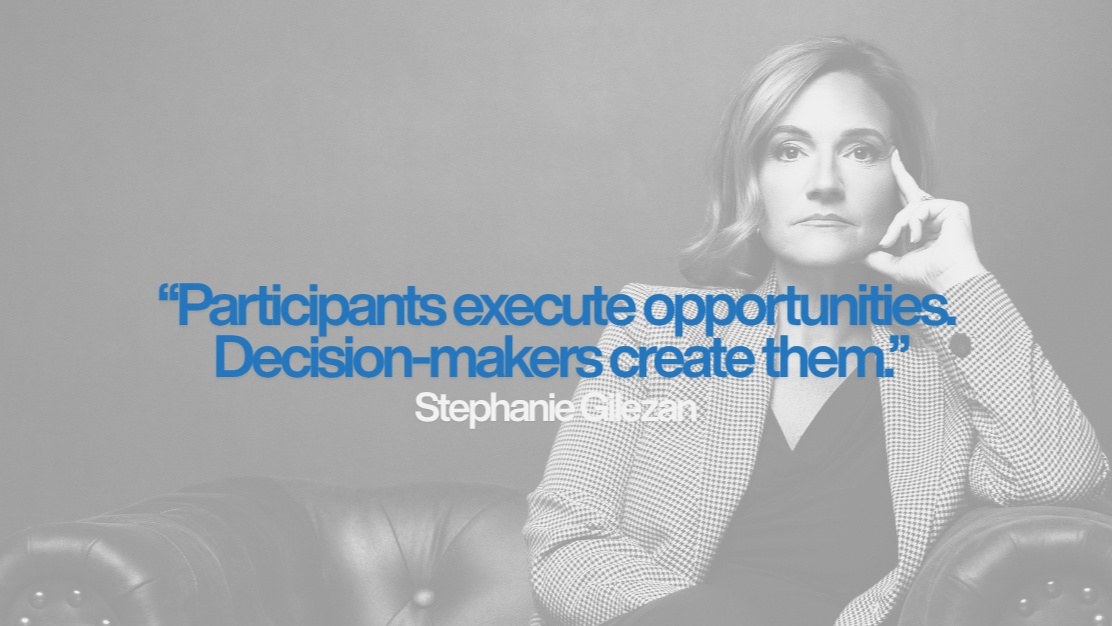
How to Stop Attending Opportunities and Start Controlling Outcomes
Most professionals are participants. They show up, contribute, execute, and wait to be selected for the next opportunity. They are skilled, often exceptional, and frequently underutilized because they have been trained to respond to the architecture someone else designed rather than build their own. The decision-maker does not wait for an invitation. The decision-maker creates the conditions in which selection is irrelevant.
The distinction first became clear to me in commercial real estate. I watched talented people work transactions as contributors running numbers, managing timelines, handling logistics while someone else controlled the relationship and received the economics. The difference wasn't skill. It was positioning. The decision-maker had structured the deal from the beginning. The participant had been brought in to execute it.
Shifting from participant to decision-maker is not simply a mindset adjustment. It is a structural change in how you approach your work. It means asking, at the front end of every opportunity: What role am I playing in this transaction, and who controls the outcome? It means building relationships with the people who have authority to say yes, not just the people who have authority to say maybe. It means being willing to bring the deal rather than waiting to be invited onto someone else's.
Decision-making also requires a different relationship with risk. Participants are risk-averse by necessity when you don't control the outcome, risk feels catastrophic. Decision-makers understand that risk is manageable when you have done the structural work upfront: clear terms, defined roles, exit provisions, and relationships strong enough to hold the deal together when things get complicated. The confidence to move decisively comes from preparation, not personality.
The professionals I have watched build lasting wealth and influence did not get there by being the best contributor in the room. They got there by becoming the person who decided what happened in the room.
Stop asking to be included in opportunities. Start being the reason the opportunity exists.
If you want better outcomes, stop optimizing for participation.
Start paying attention to where decisions are made, who controls them, and how you can be part of that structure from the beginning.
That is where careers and capital actually shift.
At what point in your career did you realize you were participating in opportunities instead of controlling them?
Originally published on LinkedIn on Apr 8, 2026.